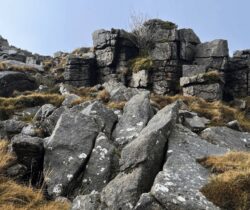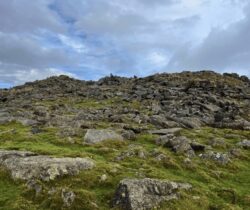
Tors are an important and striking part of the Dartmoor landscape. Sharpitor is particularly special, as it is one of the best examples of a collapsed granite tor. A collapsed tor has been broken down by severe weathering over the years, causing it to break down into multiple blocks, rather than retaining the recognisable stacks of granite. Around the larger blocks is an area of clitter, made up from smaller granite blocks, and spread out through the processes of erosion and collapse.
During World War II, RAF Sharpitor was established, featuring a mast and buildings. After the war, in 1956, plans were made to reconstruct the station for use with the “Gee” radio navigation system, but the project was delayed and eventually abandoned. There was a later attempt, by Devon & Cornwall Police and Plymouth Corporation, to build a reform school on the site, but the application was refused after a public enquiry. However, the ongoing interest in developing Sharpitor made it clear that this spectacular area of Dartmoor was under threat.
In 1984 the DPA, on the recommendation of Lady Sylvia Sayer, acquired 32 acres of land including the tor. Since acquiring Sharpitor, the DPA has worked to keep the associated archaeology visible and accessible to all. Our Conservation Volunteers have dedicated many hundreds of hours to controlling gorse and bracken around the 14 Bronze Age Hut circles and an impressive section of the Great Western Reave. This is the longest reave on Dartmoor, the southern end of which finishes east of Sharpitor, by the side of the B3212 road. Stretching for a total length of 6.2 miles, although thought to be incomplete, this piece of Bronze Age infrastructure begins beyond White Tor in the north, runs over Roos Tor, through the Merrivale archaeological landscape and Foggintor granite quarries before reaching Sharpitor.
Sharpitor is 400m above sea level, north of Burrator Reservoir and just south of the B3212. It looks over a vast historic landscape with archaeology from many ages. Preserving this particular tor is of key importance, as it showcases the amazing geological processes that created it and the geomorphological processes that broke it down. The results of an array of granite weathering processes can be seen, including mechanical weathering from the freeze/thaw process, which was particularly active during the Ice Ages.
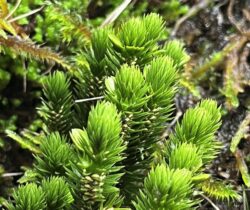
The maze of blocks creates multiple nooks and crannies that provide places for special species to occur. Sharpitor holds Fir Clubmoss and Filmy fern, as well as a rich lichen assemblage. Fir Clubmoss thrives in upland heaths and rocky outcrops, favouring acidic, nutrient-poor soils and exposed, wind-swept conditions. Wilson’s Filmy Fern grows in damp, shady environments, typically in crevices, on damp rocks, and on stream banks. The fronds of this delicate fern are just a few centimetres long, appearing translucent and resembling patterned lace. These fascinating species require open habitats: clean air, rain and a grazed landscape.
A recent survey at Sharpitor revealed an unexpectedly rich and important community of lichens living on the granite rocks. In spring 2025, lichenologists recorded 67 lichen species and 10 lichen-dwelling fungi in just one day. Often overlooked, lichens play a vital role in creating soils, supporting insects, and telling us how healthy our environment really is. Lichens are incredibly sensitive to changes in air quality and climate, making them powerful indicators of environmental health.
When compared with surveys from the 1980s, some lichen species appear to have been lost from Sharpitor and across Dartmoor. Possible causes include nitrogen deposition via rain, atmospheric pollution and climate change. However, the current mix of rare and threatened species at Sharpitor still means the site meets the scientific threshold to be considered of national importance for nature.
Alongside the mosses and lichens, Sharpitor provides a popular refuge for birds. Ravens and crows are often seen perching on the rocks, or circling above and wheatears can be seen among the clitter. Golden Plover also use the surrounding moorland over winter, having bred further north during the summer. Golden Plovers are one of Dartmoor’s rarest breeding birds, with only an estimated 1-3 pairs remaining to breed on the moor. These birds prefer remote uplands with open moorland, featuring a mosaic of heather and grass, and can be susceptible to disturbance by people and dogs.
This very special spot on Dartmoor, with fascinating archaeology, rare lichens and unique geology, is accessible today due to the work of the DPA. The charity want to ensure it remains in good condition for generations to come. During late 2025 they worked with ecologist Albert Knott to create new five year (and beyond) management plans for all their land holdings, including Sharpitor, and they are now ready to begin work, based on the recommendations.
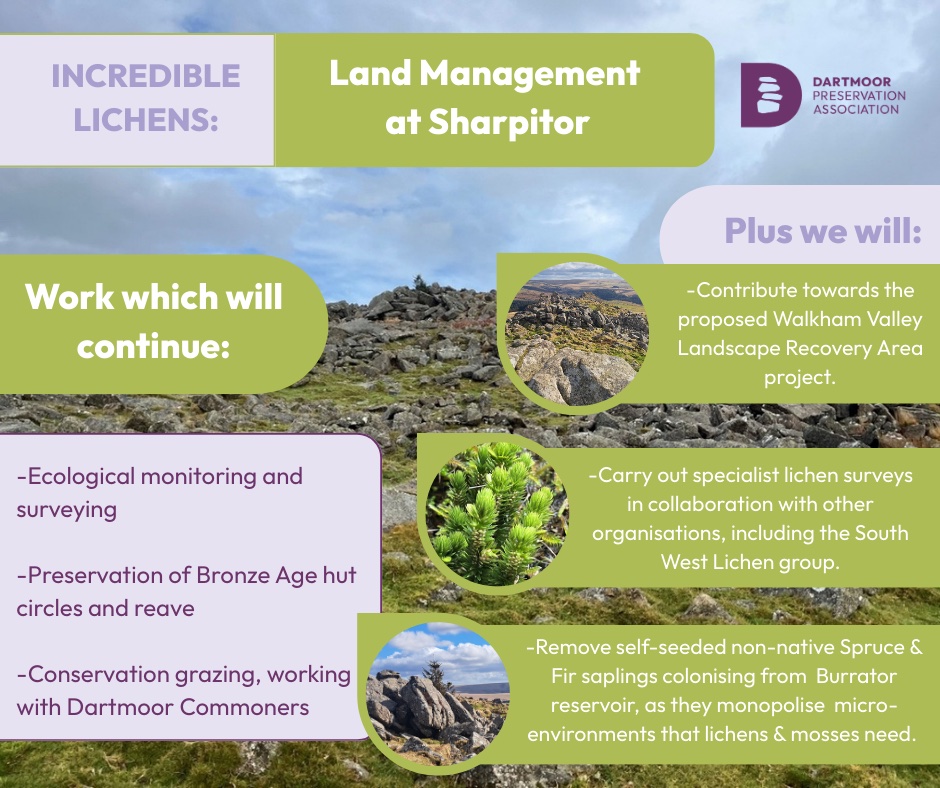
Work that will continue:
-Ecological monitoring and surveying
-Preservation of Bronze Age hut circles and reave
-Conservation grazing, working with Dartmoor Commoners
Additional approaches 2026 and beyond:
-Contribute towards the proposed Walkham Valley Landscape Recovery Area project.
-Specialist lichen surveys in collaboration with other organisations, including the South West Lichen group.
-Removal of self-seeded non-native Spruce and Fir saplings colonising from the nearby Burrator reservoir; these saplings monopolise the micro-environments that the lichens and mosses need and change the alkalinity of the soil pockets between the stones.
Read more: https://dartmoorpreservation.co.uk/news/