Pudsham Meadows is a marvellous example of flower rich grassland with associated scrub edges, recognized as a County Wildlife Site. The UK Biodiversity Action Plan identifies such fields as Priority Habitat due to their alarming decline over the past half-century. Now, they are highly localized, and Dartmoor alone accounts for about 6% of the national resource, making the careful management of Pudsham Meadows vital conservation work.
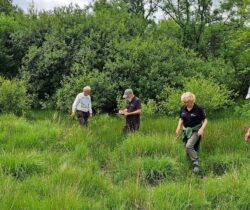
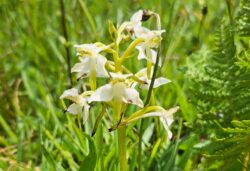
During the Dartmoor Preservation Assocation’s 2025 count, volunteers from Devon Wildlife Trust joined DPA Conservation Volunteers to record Heath Spotted, Southern Marsh, Twayblade and Greater Butterfly orchids flowering on the site. 2320 orchids were counted in total, a truly impressive number across four small fields. The delicate white and yellow Greater Butterfly orchid, the petals of which resemble the wings of a butterfly, made up 481 of this number. The Greater Butterfly orchid is considered to be a near-threatened species, having suffered a severe decline in the UK, with upland populations being lost due to intensive grazing.
DPA volunteers have worked tirelessly to boost the health of our meadows at Pudsham, with careful management, including bracken clearing and short visits from grazing Dartmoor ponies, contributing to ongoing increases in biodiversity and abundance at the site. The impressive number of orchids recorded is an indicator of the fantastic health of this increasingly rare hay meadow habitat, which offers vital food sources for bees and butterflies, including the Marsh Fritillary, Small Pearl-Bordered Fritillary and Marbled White.
However, there’s always scope to do better. During late 2025 the DPA worked with ecologist Albert Knott to create new five year (and beyond) management plans for all our land holdings, including Pudsham Meadows, and we are now ready to begin work, based on the recommendations.
Work that will continue
-Ecological monitoring and surveying
-Bracken management to protect wildflower diversity
-Conservation grazing with native Dartmoor ponies
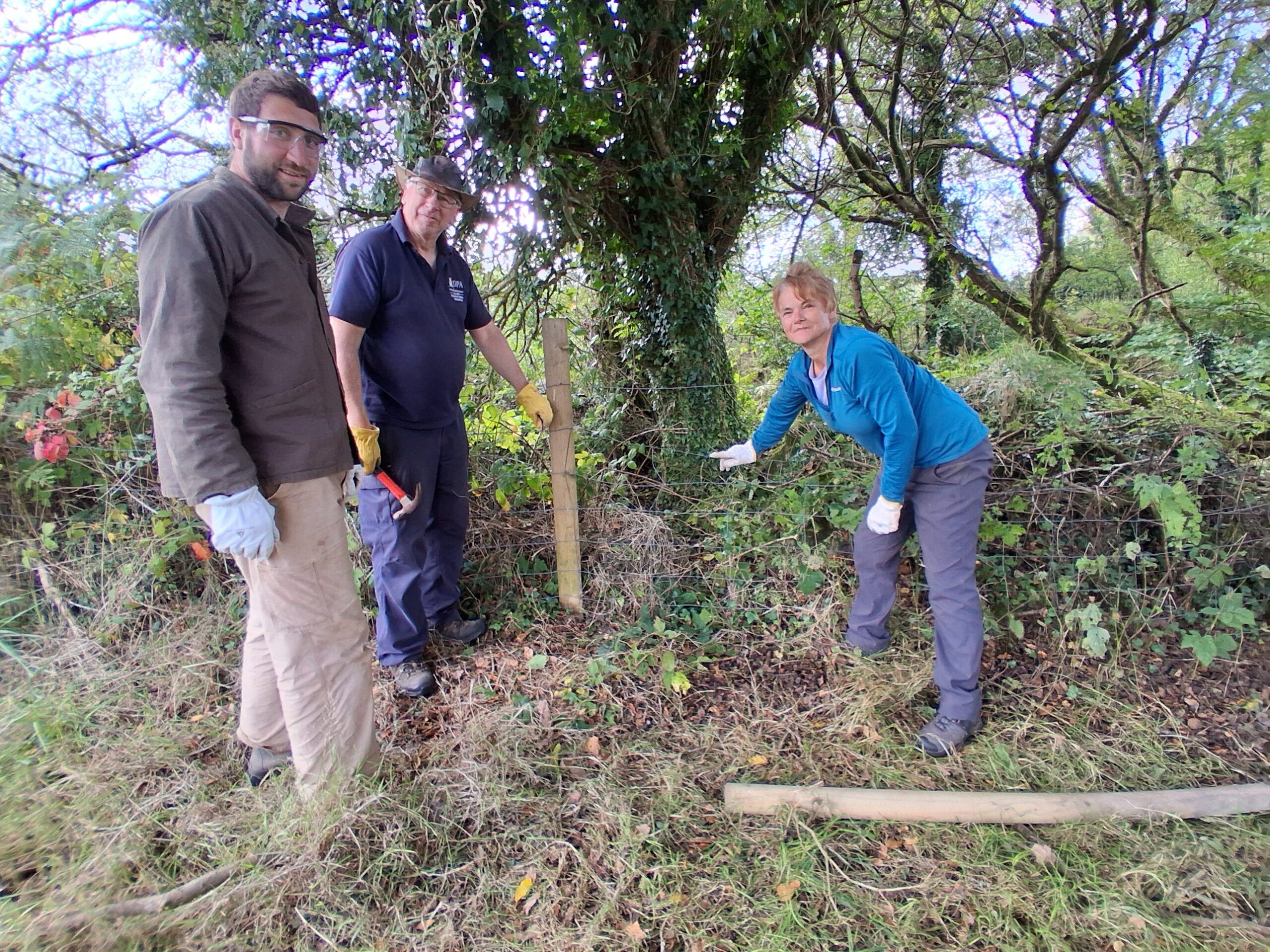
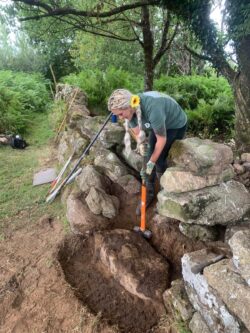
-Maintaining boundaries using traditional methods such as dry-stone walling and hedge-laying
Additional approaches 2026 and beyond
-Make meadows more herb rich and larger. These meadows were created by people and have to be maintained by people, including cutting, clearing and grazing. The bracken has to be cut every year, as do some of the trees, to provide a variable scrub edge. The result is a herb rich sward (a mixture of herbs, sedges and grasses) with few dominant grasses and multiple orchids (mainly greater butterfly, southern marsh and heath spotted).
-Conduct hard cutting in early autumn of species such as Molinia and rushes in order to make them more palatable to the ponies that graze in late autumn and early winter.
-Improve the gradation of the scrub edge of the meadows. Select trees and areas of scrub are managed during the winter, alongside invading bracken, bramble and woody growth. This will mean cutting and removing all scrub from within the main meadow/field areas but improving the hedge scrub edges round them. Creating a graduated edge and scrub boundary with brambles merging into small scrub and up to medium sized native trees. This will protect the site from winds and the road as well as providing a rich habitat for all manner of flora and fauna.
-Make conditions better for butterflies along the moorland edge. We will create a pond in a low lying corner area that remains wet most of the year and manage our common for fritillary and hedgerow butterflies. Whilst the meadows themselves are managed for biodiversity and native orchids, a portion of the holding falls outside the meadow walls and boundaries. This is dense in the plants and habitat that support the life cycle of the fritillary and so we will leave these areas deliberately un-cut in order to create a haven for breeding.
The key to this management is to continue to cut the meadows in late summer, after the main flowering period is over and then graze afterwards. On these meadows, the grazing is carried out by a small herd of Dartmoor ponies. Grazing supports biodiversity, as the ponies eat down faster growing types of grass, creating room for herbs, wildflowers and slower growing species. Additionally, these robust ponies will eat bramble, gorse and even blackthorn, naturally managing hedgerows and stopping bushes and trees from spreading out too far into the meadows. Though bracken can be weakened throughout the year by cutting and pulling, pony trampling can help with controlling it.
Feature image credit: Val Barns
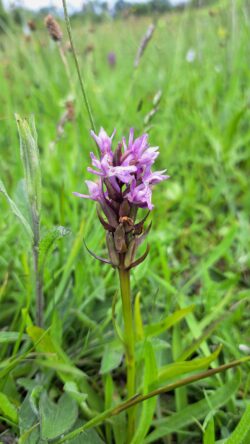
Photograph Credit: Helen Bruce